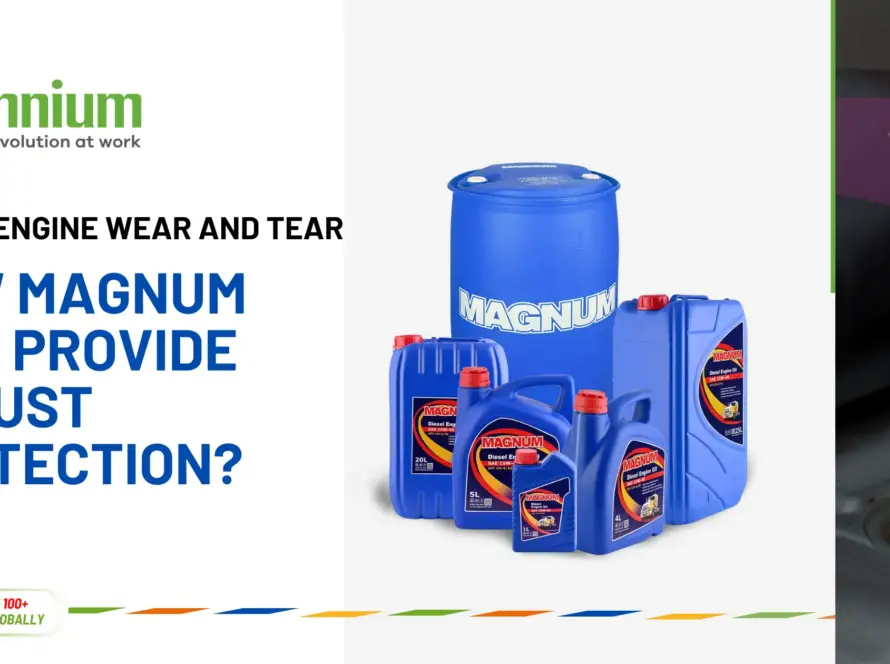
When most people think of engine coolant, they picture a liquid that keeps the temperature steady preventing overheating in summer and freezing in winter. But there’s much more happening under the hood.
Coolant is a multi-functional fluid that protects the engine from corrosion, scaling, and premature wear. It also improves efficiency, ensuring smooth, long-term operation of both light vehicles and heavy industrial machinery.
Let’s explore how coolants protect engines beyond temperature control, and why choosing the right formulation, such as Magnum Coolants, makes all the difference in performance and durability.
What Exactly Is Engine Coolant?
Engine coolant, often referred to as anti-freeze, is a 50/50 blend of ethylene glycol or propylene glycol and demineralized water, combined with special additives.
This mixture performs three critical roles:
- Heat transfer – absorbing and dissipating engine heat through the radiator.
- Freeze and boil protection – preventing freezing in cold weather and boiling in high temperatures.
- Corrosion and scale prevention – protecting metal surfaces from chemical damage.
Without coolant, an engine would overheat within minutes or corrode internally within months.
How Coolant Regulates Engine Temperature
The primary function of coolant is to stabilize temperature. As the engine burns fuel, temperatures can exceed 2,000°C inside combustion chambers. The coolant circulates through the block and radiator, carrying heat away efficiently.
- In hot conditions, coolant absorbs excess heat and releases it through the radiator fins.
- In cold conditions, the antifreeze agents lower the freezing point, preventing block cracking.
This thermal balance keeps the engine operating at its optimal efficiency range, improving fuel economy and component life.
Beyond Temperature: The Hidden Roles of Coolant
1. Corrosion Protection
Engines are made from metals like aluminum, cast iron, and steel all of which react with water and oxygen over time. If unprotected, these metals form rust and electrochemical corrosion, leading to coolant leaks, pitted surfaces, and gasket failures.
Coolant additives form a protective film that prevents metal-to-metal reactions.
Magnum Coolants use advanced corrosion inhibitors that shield all metal components from radiators and pumps to cylinder heads ensuring long-term reliability even in harsh African climates.
2. Scale and Deposit Control
Hard water minerals such as calcium and magnesium can form deposits in radiators and water jackets. Over time, these scale layers reduce heat transfer efficiency, causing overheating and uneven cooling.
Quality coolants contain anti-scaling agents that keep the system clean by preventing mineral buildup. This helps maintain:
- Consistent heat dissipation
- Better coolant circulation
- Longer radiator and pump life
3. Lubrication of System Components
Coolant also lubricates the water pump and seals, reducing friction and wear. This prevents leaks, squeaks, and early pump failure problems often seen when plain water or poor-quality coolants are used.
A properly formulated coolant like Magnum Long-Life Coolant ensures smooth rotation and tight sealing in high-speed cooling systems.
4. Prevention of Cavitation
In high-pressure engines, vapor bubbles can form and collapse violently on metal surfaces, a phenomenon called cavitation. This damages liners and impellers over time.
Quality coolants contain anti-cavitation additives that reduce vapor formation, protecting internal metal walls and preserving coolant flow stability.
Understanding the Role of Anti-Freeze Agents
Coolant’s anti-freeze component glycol plays a key role in year-round performance.
Here’s how it helps:
- Lowers freezing point: Prevents coolant from solidifying in cold temperatures.
- Raises boiling point: Allows the engine to operate safely at higher temperatures without vapor lock.
- Improves additive stability: Keeps corrosion inhibitors and anti-foam agents effective over long intervals.
For most climates, including tropical Africa, a 50/50 coolant-to-water mix provides the best balance of protection and heat transfer efficiency.
Choosing the Right Coolant Type
Coolants are available in different formulations depending on engine design and maintenance needs.
1. Conventional (Inorganic Additive Technology – IAT)
- Contains silicates and phosphates for quick metal protection.
- Ideal for older engines or systems with copper and brass components.
- Requires replacement every 1–2 years.
2. Organic Acid Technology (OAT)
- Long-life coolant with organic inhibitors.
- Excellent corrosion protection for aluminum components.
- Suitable for modern engines and heavy-duty vehicles.
- Replacement interval: 4–5 years.
3. Hybrid Organic Acid Technology (HOAT)
- Combines benefits of IAT and OAT coolants.
- Balanced protection for mixed-metal systems.
- Used widely in industrial and commercial fleets.
Magnum Coolants are available in OAT and HOAT variants, offering extended protection against rust, scale, and high-temperature degradation.
Coolant Maintenance and Replacement Intervals
Even the best coolant loses its protective properties over time. Regular inspection and replacement keep the system efficient and damage-free.
Recommended Practices:
- Check coolant level monthly and top up if necessary.
- Inspect color and clarity — replace if the coolant turns brown or cloudy.
- Flush and refill the system at recommended intervals (typically every 2–4 years).
- Always use distilled or demineralized water when diluting concentrate coolants.
- Avoid mixing brands or formulations — this can destabilize additives.
Neglecting coolant maintenance can lead to radiator clogs, gasket failure, or even engine seizure due to overheating.
How to Select the Right Coolant Mix
Choosing the right coolant ratio is key to balanced performance:
Mix Ratio | Freeze Protection (°C) | Boil Protection (°C) | Recommended For |
30% Coolant / 70% Water | -15 | 104 | Mild climates |
40% Coolant / 60% Water | -25 | 106 | Warm-to-cool regions |
50% Coolant / 50% Water | -35 | 108 | All-season performance |
60% Coolant / 40% Water | -55 | 112 | Extreme cold or high load |
For Africa’s predominantly hot regions, a 50/50 mix provides the right balance of corrosion control, heat transfer, and durability.
Magnum Coolants — Trusted Protection for Every Engine
Magnum Coolants are designed for year-round engine protection in passenger vehicles, commercial trucks, and heavy-duty machinery.
Key Features:
- Advanced anti-corrosion and anti-scaling technology
- Long-life OAT/HOAT formulations for reduced maintenance
- Excellent thermal stability for high-load operations
- Compatible with all major engine materials including aluminum, cast iron, and steel
Applications:
- Automotive engines
- Construction and agricultural equipment
- Industrial generators and marine systems
By maintaining stable cooling and corrosion protection, Magnum Coolant help reduce downtime, extend service intervals, and lower total operating costs.
Frequently Asked Questions About How Coolants Protect Engines Beyond Temperature Control
How often should coolant be replaced?
What causes engine overheating?
Why use a 50% coolant mix?
Final Word
Coolants do far more than regulate temperature they preserve the engine’s health, efficiency, and reliability. From corrosion prevention to scaling control, the right coolant safeguards every metal surface and moving component inside your cooling system.
With Magnum Coolants, you get all-season protection, engineered to perform in Africa’s demanding conditions keeping engines running cooler, cleaner, and longer.