Gearboxes on a mining site rarely get an easy job. Crusher drives absorb shock loading every time an oversized rock passes through. Kiln and mill drives run slow and heavily loaded for weeks between shutdowns.
Conveyor gearboxes run more steadily but sit in an atmosphere thick with abrasive dust for their entire working life. The gear oil protecting all of that has to hold up to conditions most industrial lubricants were never really tested against.
This guide compares five of the gear oils most commonly specified for mining gearboxes in 2026, how they perform against the demands mining actually places on them, and where each one tends to fit best.
What Mining Gearboxes Demand From a Gear Oil
Before comparing products, it’s worth being specific about what separates mining duty from general industrial use.
Shock loading is the defining challenge for crushers and mills, where sudden impact can momentarily compress the oil film to almost nothing right at the point of contact, demanding an extreme-pressure additive package strong enough to hold up through that instant rather than only under steady load.
Sustained high temperature is the second major factor, since heavily loaded gearboxes running continuously generate substantial internal heat on top of already-elevated ambient conditions across much of Africa and the Middle East. And contamination resistance matters more here than almost anywhere else in industrial lubrication, given how much airborne dust a working mine site generates.
With those demands as the baseline, here’s how the leading options compare.
1. Magnum Gear Oils
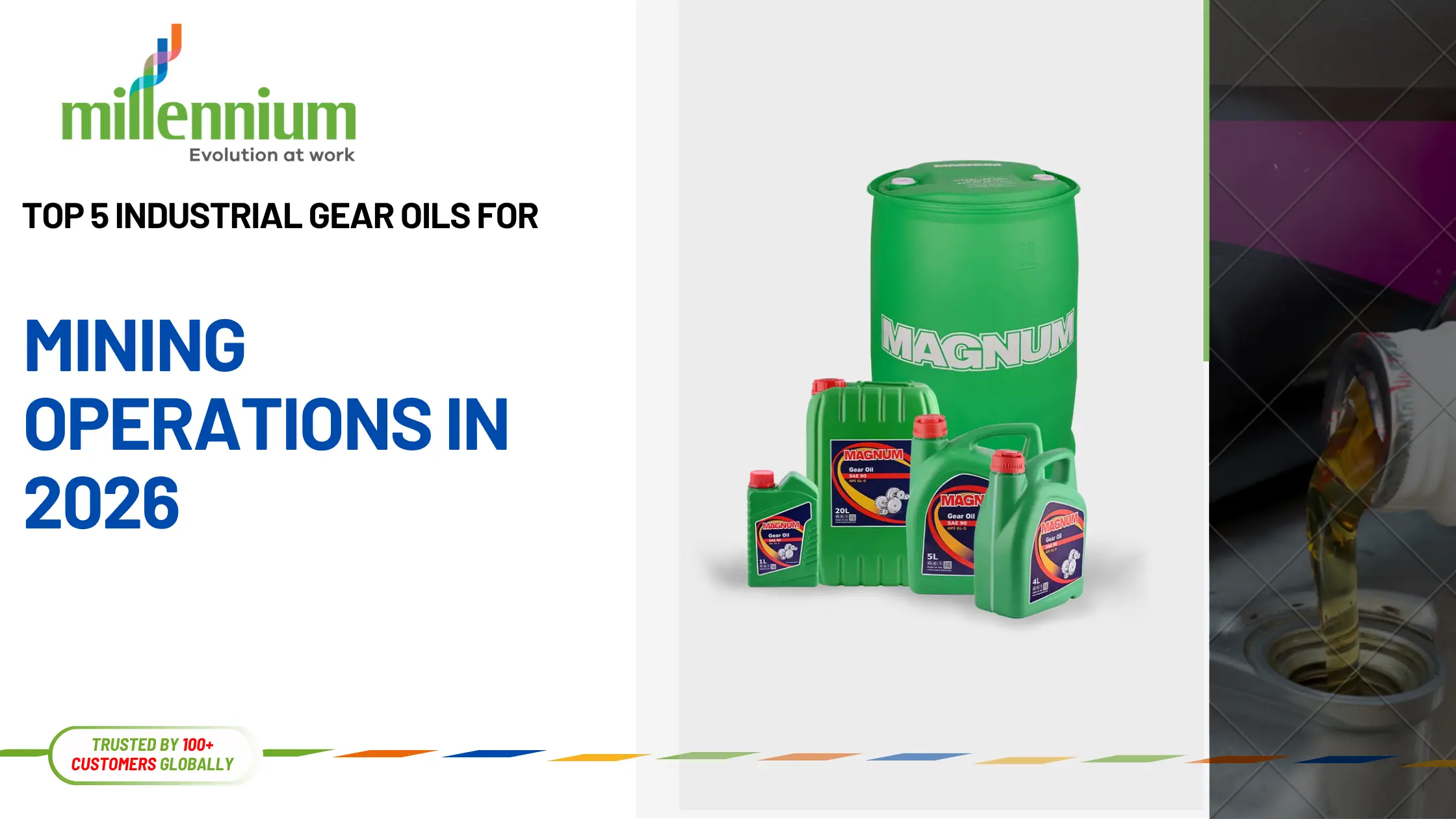
Magnum IGO EP gear oils are formulated specifically for the load and thermal conditions mining and heavy industrial equipment face, with a strong extreme-pressure additive package built to hold film strength through shock loading rather than just steady load.
The range covers the ISO grades most commonly specified for mining gearboxes, from ISO 220 through ISO 460, with oxidative stability engineered for the extended, continuous-duty cycles typical of crusher, mill, and kiln drives.
Its practical edge in African and Middle Eastern markets is regional manufacturing and supply. For mining operations running fleets across remote sites, consistent local availability matters as much as the performance figures on a data sheet, since a gearbox that’s due for a change can’t always wait on an imported shipment.
2. Shell Omala
Shell Omala is one of the most established names in industrial gear lubrication, and its S2 and S4 series are widely specified across global mining operations. It offers strong film strength and reliable thermal stability, backed by Shell’s extensive worldwide distribution network and a long track record in heavy-duty applications.
Omala performs well in operations with structured maintenance programs and reliable procurement, and its global reputation makes it a common default for multinational mining companies with standardized specifications across sites. It typically carries a premium price point relative to regional alternatives.
3. Mobilgear
ExxonMobil’s Mobilgear 600 XP series is engineered specifically for demanding gear applications and has a strong reputation in large-scale mining and heavy manufacturing. It delivers strong extreme-pressure protection and thermal stability, with additive chemistry designed to support extended drain intervals under continuous heavy load.
Mobilgear is particularly well regarded for crusher and mill applications where shock loading is a constant factor. Like Omala, it sits at a premium price tier and performs best in operations with centralized procurement and dependable supply chain access.
4. Castrol Alpha
Castrol Alpha SP is a long-established industrial gear oil with solid extreme-pressure protection and dependable thermal and oxidative stability across a range of viscosity grades. It’s compatible with a wide variety of gearbox designs and benefits from Castrol’s broad distribution presence across African markets.
Alpha SP is a reliable option for standard mining and heavy industrial gearbox applications, though operations running the heaviest shock-load duty, such as primary crushers, may want to check its EP rating specifically against equipment demanding the very highest film strength.
5. Total Carter
TotalEnergies’ Carter range, including Carter EP and Carter SH, offers strong anti-wear and extreme-pressure performance with good oxidative stability for extended service life. Its particular strength across Africa is TotalEnergies’ deep distribution infrastructure, especially in Francophone West and Central African markets where its supply network is unusually well established.
Carter is a dependable choice for mining operations in regions where TotalEnergies’ local presence provides a genuine logistical advantage over brands with thinner regional coverage.
Which ISO Grade Suits Mining Equipment?
ISO grade selection should follow the specific gearbox’s duty rather than a single fleet-wide default. Conveyor and material handling drives running at moderate speed with steadier load typically use ISO 220.
Crushers, mills, and kiln drives, which run slower under heavier and often shock-loaded torque, more commonly call for ISO 320 or ISO 460, particularly where ambient and operating temperatures run consistently high. The OEM specification should always be the starting reference, with adjustments made where actual operating temperature runs meaningfully hotter than the conditions the original specification assumed.
Frequently Asked Questions About the Top 5 Industrial Gear Oils for Mining Operations in 2026
Which gear oil is best for mining?
How does Magnum compare?
Which viscosity grades are common?
The Bottom Line
Choosing a gear oil for mining equipment comes down to matching extreme-pressure protection and thermal stability to genuinely demanding conditions, while factoring in the supply reliability that keeps a remote mining fleet running without delay.
Millennium Group’s Magnum IGO EP range is formulated around exactly those conditions, offering performance comparable to leading global brands with the regional availability that mining operations across Africa and the Middle East depend on.