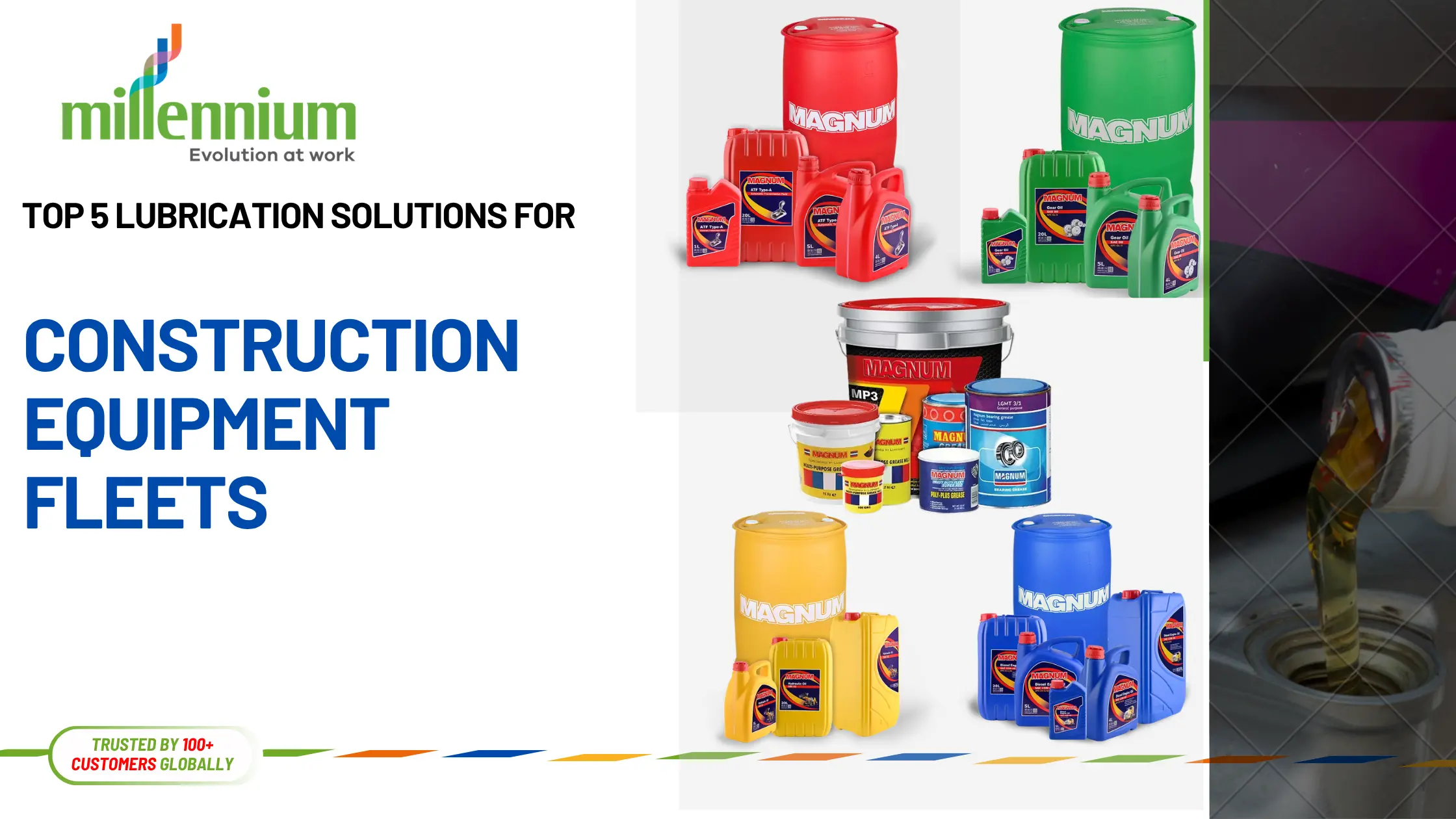
A single excavator uses more types of lubricant than most people expect. Hydraulic oil runs the boom, arm, and bucket. Gear oil protects the final drives and slewing mechanism. Grease holds up at every pin and bushing. Engine oil and coolant keep the diesel engine running.
Multiply that across a fleet of excavators, loaders, graders, and dump trucks, and a construction operation ends up managing five or six distinct lubrication categories at once, each with its own performance demands and its own consequences if the wrong product gets used.
Getting fleet lubrication right isn’t about finding one product that does everything. It’s about understanding what each category needs to do and matching products to that job specifically.
1. Hydraulic Oils
Hydraulic systems are the muscle behind most construction equipment movement booms, buckets, blades, and outriggers all run on hydraulic pressure.
The oil needs strong anti-wear protection to guard pumps and valves through constant cycling, good thermal stability since hydraulic reservoirs run hot under sustained heavy use, and reliable performance across the temperature swings a jobsite sees between early morning and midday heat.
ISO 46 covers the majority of construction hydraulic systems, though equipment running consistently hot or under particularly heavy load may call for ISO 68. As with any hydraulic application, matching viscosity grade to the equipment’s actual operating temperature rather than a generic default is what determines how well the system performs day to day.
2. Gear Oils for Final Drives and Slewing Systems
Final drives, swing gears, and other enclosed gearboxes on construction equipment take heavy, often shock-loaded torque, particularly on excavators and loaders working uneven or loose ground. These components need extreme-pressure gear oil with strong film strength to prevent the metal-to-metal contact that shock loading can otherwise cause.
Viscosity requirements vary by component and manufacturer specification, but heavier grades in the ISO 220 to ISO 460 range are typical for the slower, higher-torque gearboxes found in this equipment category.
3. Multi-Purpose and Extreme-Pressure Grease
Every pin, bushing, and pivot point on a piece of construction equipment depends on grease, and there are a lot of them on a typical excavator or loader.
These points are directly exposed to dirt, water, and constant movement, which makes grease selection about more than just lubrication. It has to resist washout, hold up under shock loading at the pin joints, and maintain consistency across the temperature range the equipment operates in.
Lithium and lithium-complex EP greases are the standard choice for most construction applications, offering a practical balance of water resistance, mechanical stability, and load-carrying capacity across the pin and bushing points that see the most movement and the most exposure.
4. Automatic Transmission Fluid
Wheeled loaders, graders, and other equipment with automatic or powershift transmissions rely on ATF that does more than one job at once. It transmits hydraulic power through the transmission, lubricates gears and bearings, and in many designs also manages clutch friction characteristics, all while running at temperatures that climb quickly under heavy load.
Using the transmission manufacturer’s specified ATF type matters more here than in almost any other lubrication category, since friction modifiers and viscosity characteristics are tuned specifically to how a given transmission design engages its clutches. The wrong ATF type can cause shifting problems even when every other performance characteristic looks acceptable on paper.
5. Diesel Engine Oil and Coolant
The diesel engines powering construction equipment run long hours under heavy, variable load, often with significant idle time between bursts of full-throttle work. Engine oil needs strong detergency to manage soot loading from that duty cycle, along with the total base number to neutralize acidic combustion byproducts over extended service intervals.
Coolant performance matters just as much on a jobsite, particularly in hot climates where engines already run close to their thermal limits. A properly maintained coolant mixture protects against both overheating and internal corrosion, and neglecting it is one of the more common, and more preventable, causes of unplanned engine downtime on construction fleets.
Building a Fleet-Wide Lubrication Plan
Managing five distinct lubrication categories across a mixed fleet works best with a documented plan rather than relying on individual operators or technicians to remember specifications machine by machine.
That typically means a reference sheet matching each equipment type to its correct hydraulic oil, gear oil, grease, ATF, and engine oil specification, paired with re-lubrication and drain intervals adjusted for how hard each machine actually works rather than a single fleet-wide default.
Standardizing on a single lubricant supplier across categories, where product quality supports it, also simplifies procurement and reduces the risk of the wrong product ending up in the wrong machine, which remains one of the more common and costly mistakes on construction sites with high equipment turnover and frequent operator changes.
Frequently Asked Questions About the Top 5 Lubrication Solutions for Construction Equipment Fleets
What lubricants do construction fleets require?
How can downtime be reduced?
Which products are most important?
The Bottom Line
Construction equipment fleets don’t need a single miracle lubricant; they need the right product in each of five distinct roles, applied consistently across every machine. Millennium Group’s full product range covers hydraulic oils, industrial and gear oils, greases, and transmission fluids formulated for the demands construction equipment places on each of them.